What Is a UGC Creator? Meaning and How to Start in India
UGC creator meaning in simple words: how it differs from an influencer, what brands ask for, usage rights, and how to start with a portfolio and a price list.
PParth Garg· Founder, Insidemetics · Updated · 3 min read
In short
- A UGC creator makes natural, phone-style videos and photos that brands post on their own pages and ads.
- Unlike influencers, UGC creators are paid for the content, not for their followers.
- Price depends on the number of videos, how long and where the brand can use them, and extra versions.
- Start with 3–5 sample videos of products you own and a clear price list.
UGC stands for user-generated content: photos and videos that look like a real customer made them. A UGC creator makes this kind of content for brands, on purpose and for pay. The brand then posts it on its own account, website or ads. You don't need a big following to do it, which is why it's a popular first income for new creators.
UGC creator vs influencer
| UGC creator | Influencer | |
|---|---|---|
| Paid for | The content itself | Reaching their followers |
| Followers needed | None | Usually thousands |
| Where the content goes | The brand's pages and ads | The influencer's own account |
| Who uses the content | The brand, for the time agreed | Mostly the influencer |
What brands ask for
- Short vertical videos (15–60 seconds) showing the product in use.
- Unboxing and first-impression videos.
- Testimonial-style videos talking to the camera.
- Lifestyle photos of the product at home, at the gym or on a desk.
- Several hooks (first 3 seconds) for the same video, so the brand can test ads.
A usual job: the brand sends a brief and the product, you film and edit, you send the files, and you make one or two rounds of changes. It often takes one to two weeks.
Usage rights: the part that changes the price
Usage rights say how the brand may use your video: on its organic pages only, or in paid ads too, and for how long (for example 3 months, 12 months or forever). Paid ads and longer use are worth more. Write the usage terms in every quote, so there's no confusion later.
How to start as a UGC creator in India
- Pick 2–3 product types you use daily: skincare, food, gadgets, fitness gear.
- Make 3–5 sample videos with products you already own, as if a brand asked you.
- Put them in a simple portfolio: a Google Drive folder or a page on your store.
- Write a price list: per video, extra hooks, raw footage, and usage (organic or ads, and how long).
- Pitch small Indian D2C brands by DM or email with one sample made for their product.
- Take payment upfront or 50% before you start.
Let brands book and pay you online
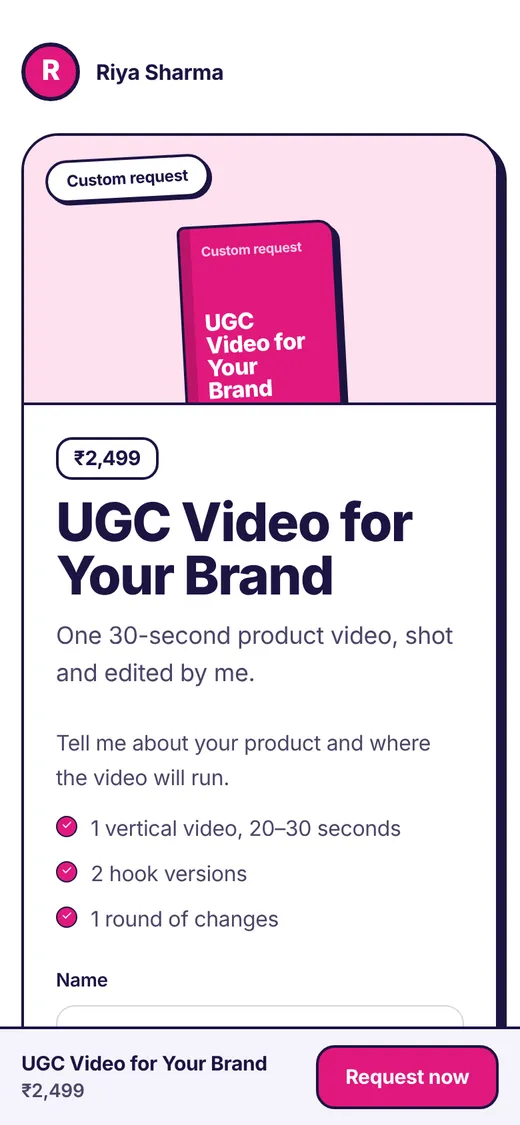
Instead of sending bank details in DMs, you can list your UGC package as a custom request. The brand answers your questions (product, platform, deadline), pays by UPI or card, and you deliver the video after.
Frequently asked questions
What does UGC creator mean?
Someone who makes natural-looking product videos and photos for brands to use on their own pages and ads. The brand pays for the content, not for the creator's followers.
Do I need followers to become a UGC creator?
No. Brands look at your sample videos, not your follower count.
Do UGC creators post the video on their own account?
Usually not. The brand posts it. If a brand also wants you to post it, that's an influencer deal and should be priced separately.
How much do UGC creators charge in India?
It varies widely by niche, experience, number of videos and usage rights. Start with a simple per-video price, add a fee for paid-ad usage, and raise prices as your portfolio grows.
Parth Garg · Founder, Insidemetics
Parth is building Insidemetics, a link-in-bio creator store where buyers pay straight into the creator's own PayPal or Razorpay account and the platform takes 0% of sales. He writes these guides from what he learns building checkout, delivery and billing for creators.
Sources (checked October 2026)